
Guide

In content design, the structure or pattern you use on a page (or in a video, podcast, or social post) plays a pivotal role in the success of your content.
In this guide, we’ll explore 10 patterns for structuring your content to maximise understanding, engagement, and effectiveness. There’s also a matrix to help you choose the right structure based on your specific content objectives.
What information patterns and narrative structures are
Information patterns and narrative structures refer to how information is organised and presented within a piece of content.
- Information patterns apply to informative or educational content, where the scope is to inform or explain. In short: facts.
- Narrative structures apply to persuasive or entertaining content, where the scope is to influence or engage. In short: stories.
Choosing a pattern or structure is an important step in creating content because it can impact how easily users can understand and navigate the information presented. The right structure can enhance the user experience by improving readability, comprehension, and engagement.
10 different patterns and structures for content
The following list is made up of 10 different patterns and structures for content that I find useful in my work. It’s not an exhaustive list – there are plenty of other ways to structure information or tell a story – but I hope you’ll find it a useful starting point.
How patterns and structures fit with content types
Content types are repeatable formats that are used to convey information. A news story, a biography, a product listing, an event: these are all examples of content types.
Content types are different from structures or patterns, but there are also times when they overlap. For example, a news story content type could use a different pattern or structure depending on the information and intention behind it. It could use an inverted pyramid if it’s a short and simple story, or a framing narrative for something longer and more complex. But a step-by-step guide content type would always use a sequential structure, because the sequential steps are an intrinsic part of the content.
1.Inverted pyramid information structure
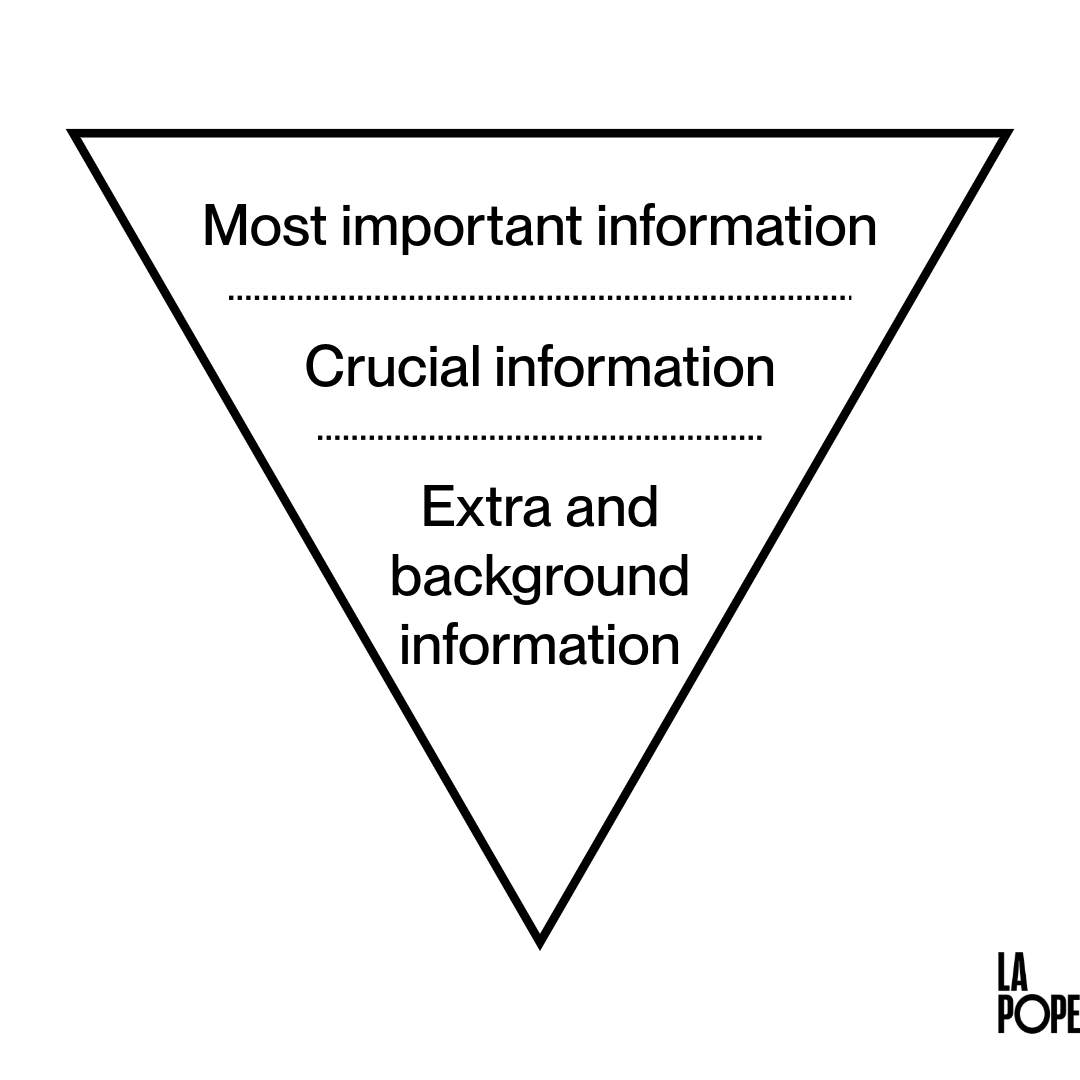
The inverted pyramid means content that starts with the most important information and then provides supporting details in descending order of importance. This is a pattern, but it’s also a cornerstone principle that underpins good content and should be used widely.
For example: a news story, like this one ‘Prehistoric’ seagull eats pigeon in children’s play park, The Argus or this one Parkinson’s UK awards £1m to new research project, Parkinson’s UK.
It’s good for factual content like:
- News articles, especially shorter updates or reports
- Information and advice, especially slightly shorter examples
2. Hierarchical information structure
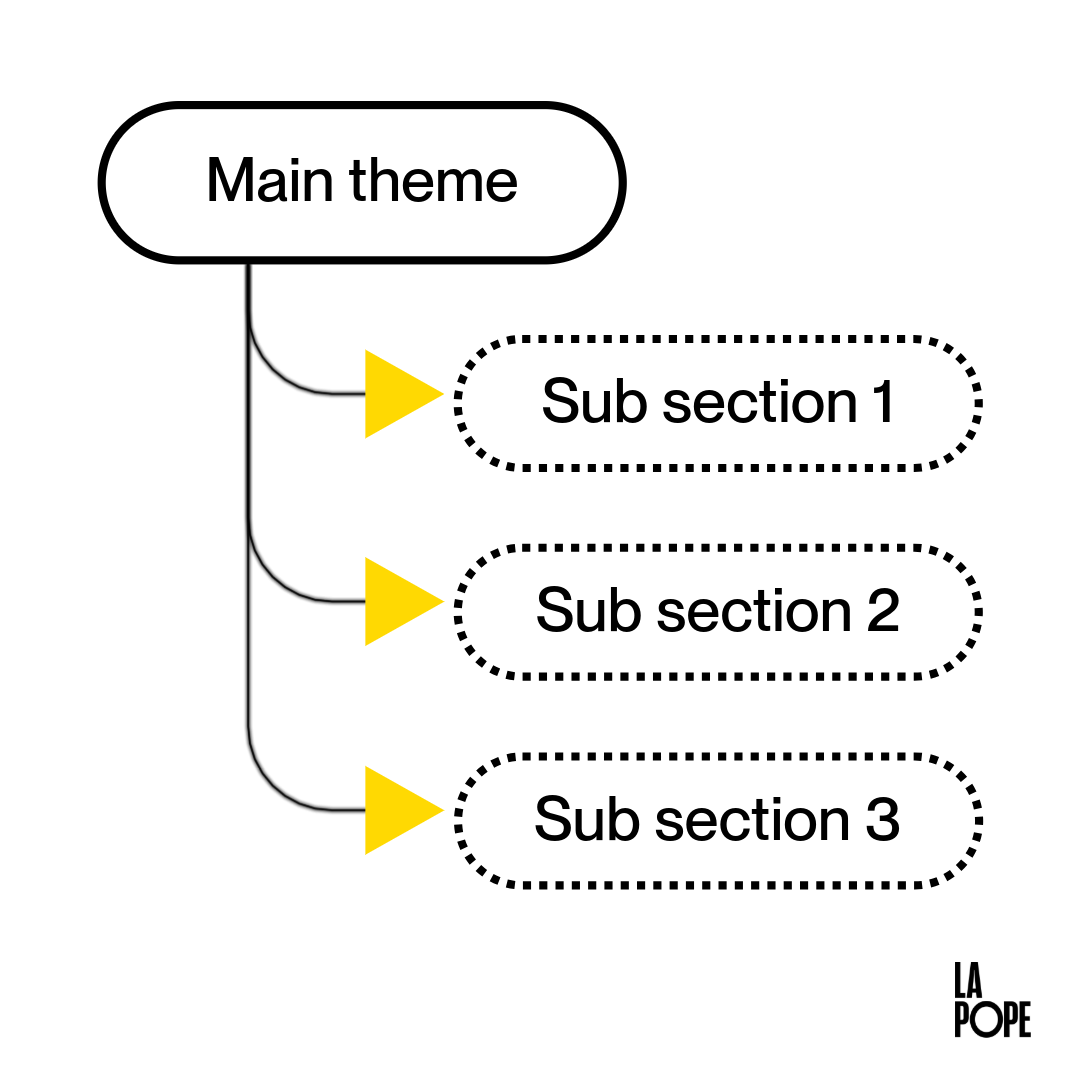
Hierarchical information structure means content broken up into sub sections or levels that reflect the hierarchical relationships between the information.
For example: content about an organisation or team structure, where you’d have sections on the different departments or teams, like this team page from Shelter: Our people, Shelter England.
It’s good for factual content like:
- Guides where you can break the parent topic down into a list of clear child topics
- Information pages about a hierarchy or subject matter that has an inherent structure
3. Sequential information structure
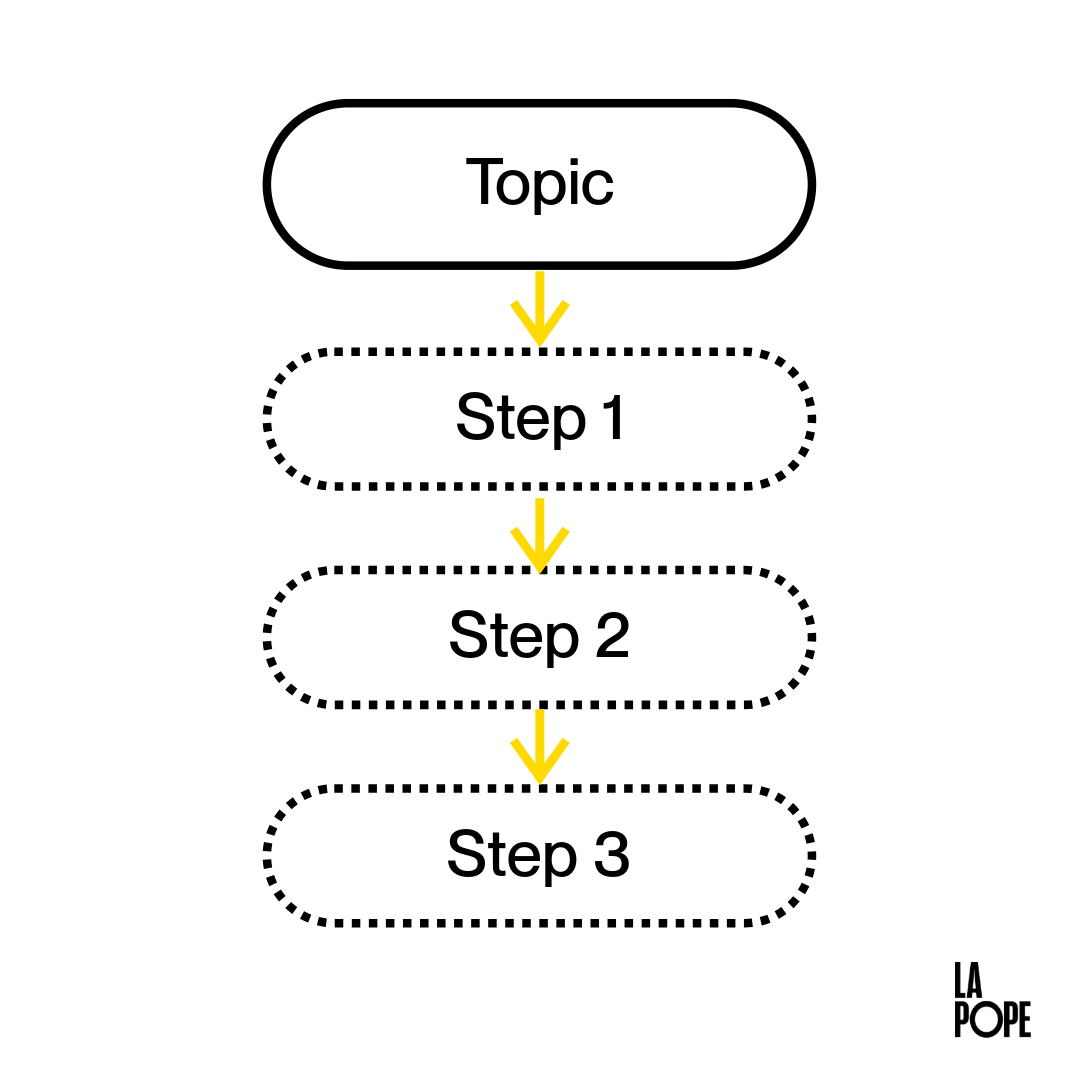
Sequential information structure is content presented in a specific sequential or chronological order.
For example: a help article with a process the user needs to follow, like this one Notice and Takedown process for copyright infringement, from DACS
It’s good for factual content like:
- Instructions and step-by-step guides, like the one above
- Timelines and histories, like this one: Pregnancy week-by-week, NHS
4. Problem Solution Benefit information structure
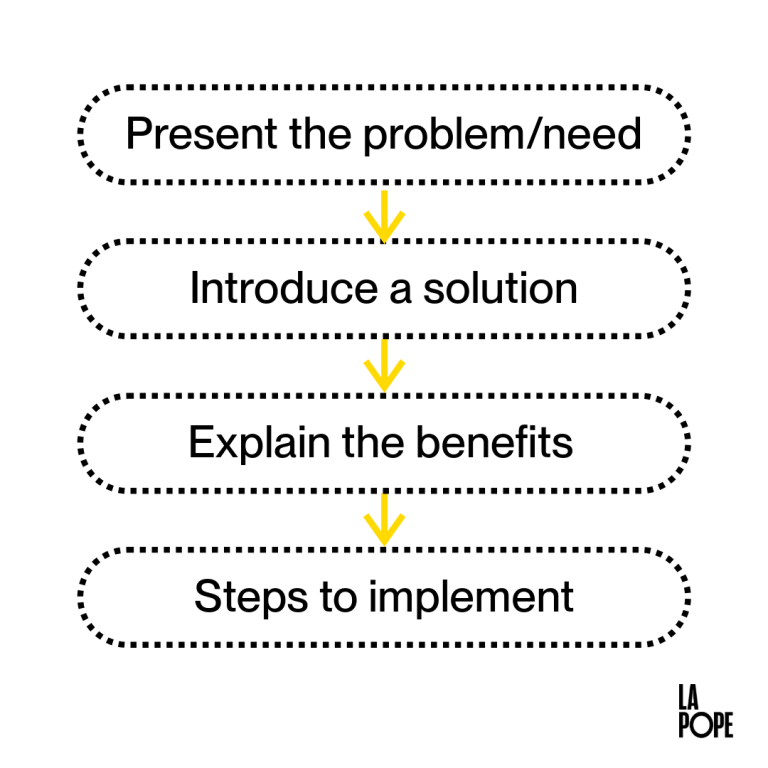
Problem Solution Benefit is a content structure that highlights a problem, proposes a solution, and emphasises the benefits of that solution.
For example: this service landing page Mentoring and coaching for content people, Lauren Pope.
It’s good for factual and persuasive content like:
- Product or service content. For example landing pages (like the one above) where you reflect a problem/need the user has, explain how your product/service can solve it, and the benefits to the user
- Campaigns, fundraising, calls for support. For example, a campaign where you present a problem, show how to solve it, and describe the better future this will lead to, like this one Adopt a Giant Panda today, WWF UK
5. Linear narrative structure
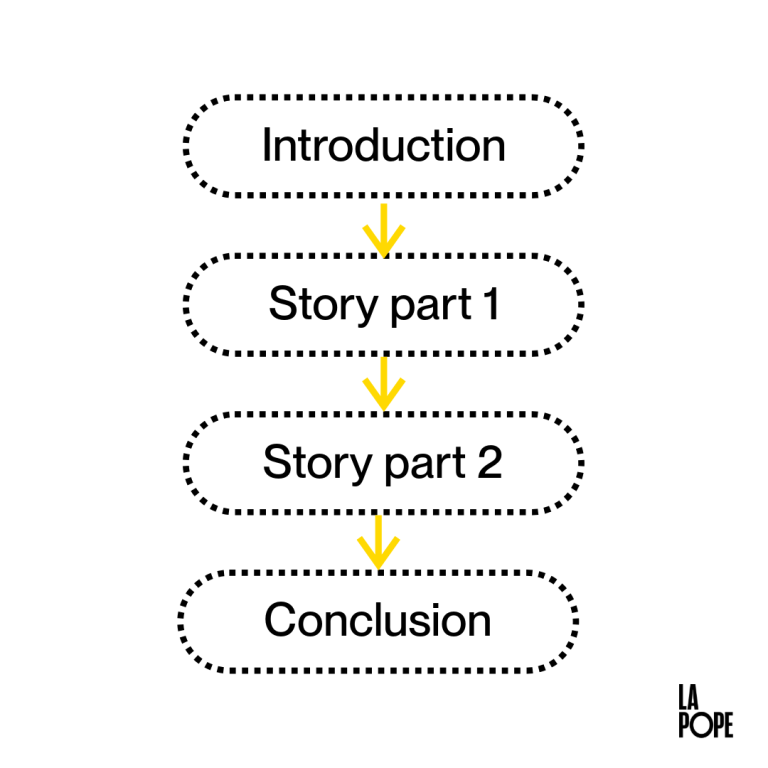
Linear content presents events in chronological order, from start to finish. This is like the sequential information structure, but is more suited to editorial content, rather than information content.
For example: Tom Hollander’s brilliant ‘A Life in the Day’ might be the best one ever, The Poke (The article in the images, not the web page the images are on. If you have a Times subscription, you can read the original here Tom Hollander on sleeping pills and hugging pillows)
It’s good for factual and persuasive content like articles and news stories with a timeline or sequence involved, like simple case studies, event reports or write ups, and ‘day in the life’ style articles.
6. Nonlinear narrative structure
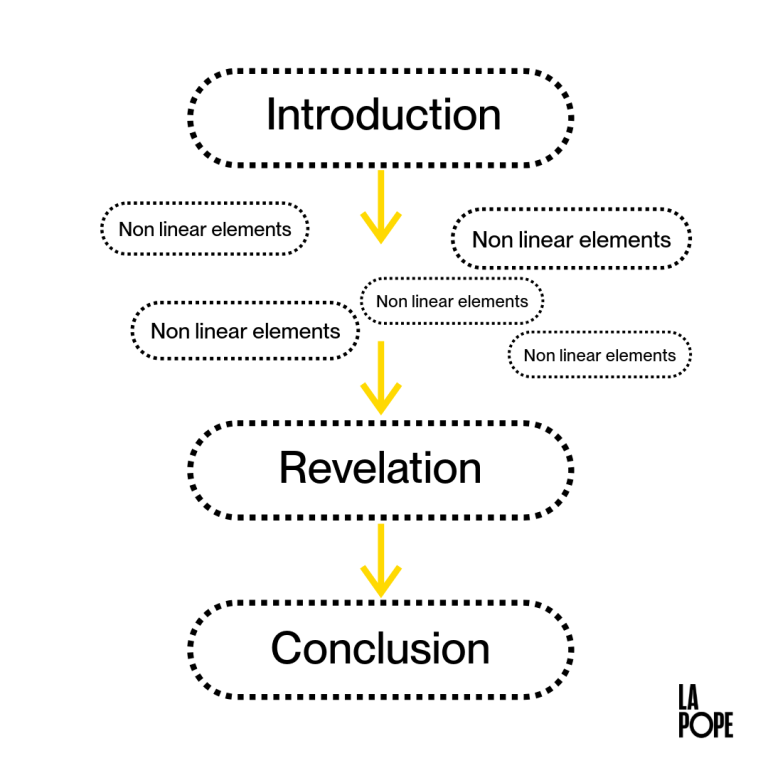
Nonlinear content presents events out of chronological order, jumping between different perspectives and different points in time.
For example: Memento or Arrival.
It’s good for articles, campaigns, reports, videos and series that need to:
- Include an intricate exploration of events and relationships
- Engage the user by building suspense or curiosity
- Persuade the user by providing multiple perspectives to build a case or argument
7. Circular narrative structure
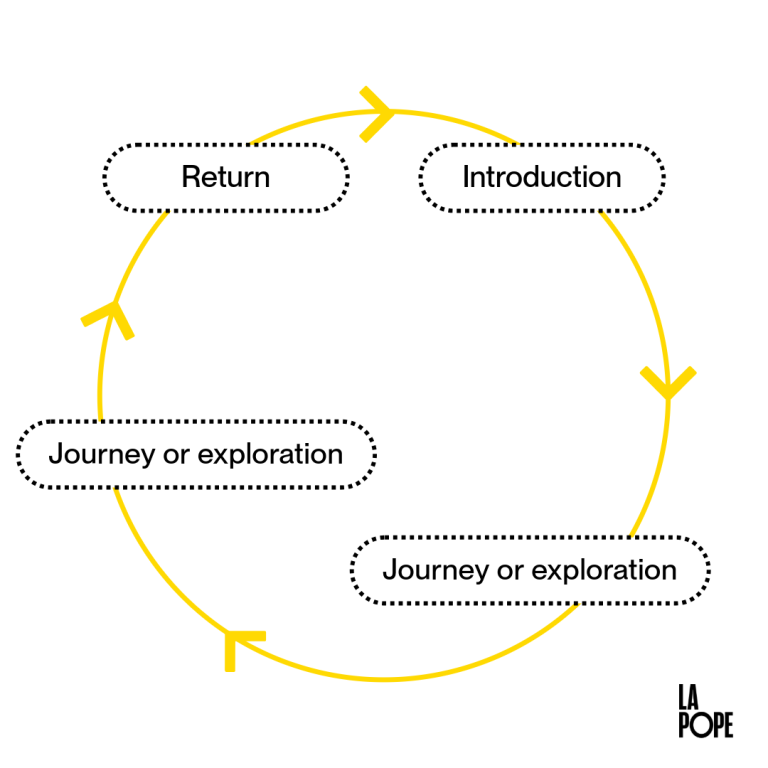
Circular content has a structure where the narrative ends back where it started, but the events that happen in the middle provide new meaning or a lesson.
For example: The Wizard of Oz, The Hobbit.
It’s good for articles, campaigns and reports that need to:
- Make the reader think and reflect on a theme or message
- Provide a sense of closure or interconnectedness
8. Three act narrative structure
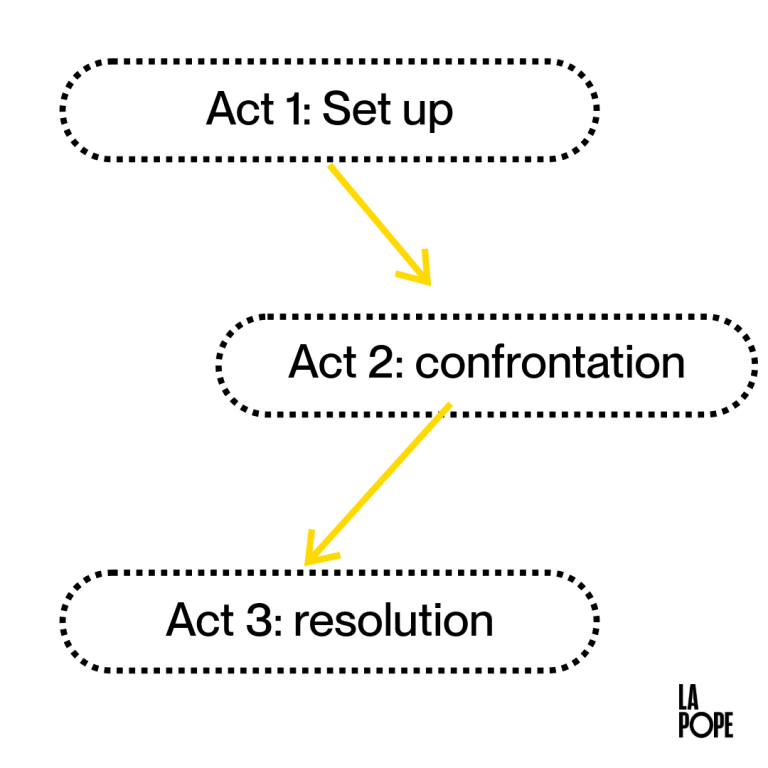
Three act structure content that a setup, a confrontation, and a resolution. The most common kind of storytelling in film, literature and theatre – something most people will be familiar with from earliest childhood.
For example: Pride and Prejudice, Die Hard.
It’s good for articles, campaigns, reports, videos and series that need to:
- Entertain or engage the user by building suspense and tension
- Persuade the user, or advocate for something, by using a structure that feels familiar and comfortable
- Make longer stories engaging and help the reader to feel oriented
9. Parallel narrative structure
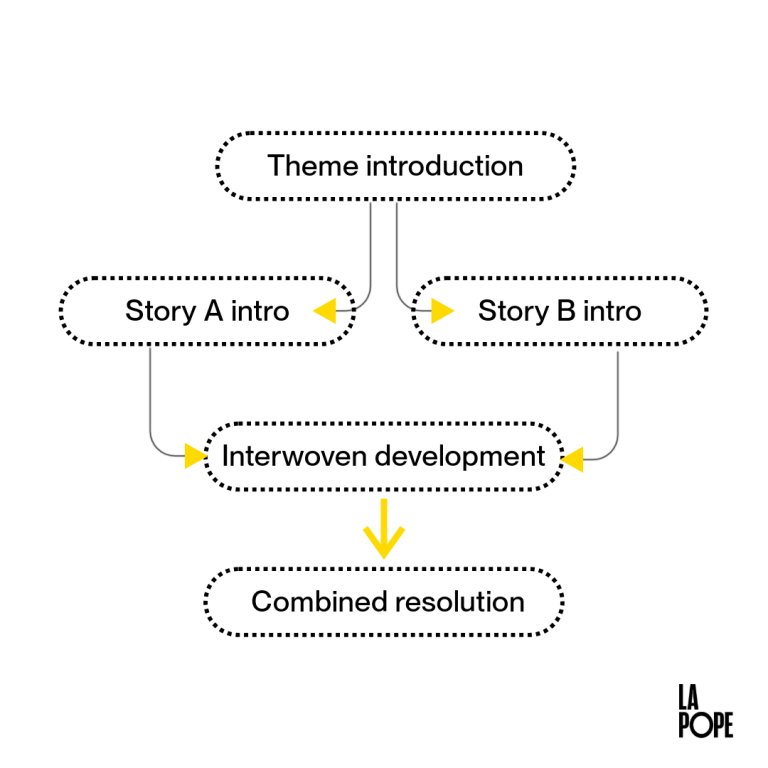
Parallel narrative content has two or more separate narratives that unfold concurrently, often intertwined or contrasting with one another.
For example: Sliding Doors.
It’s good for articles, campaigns, reports, videos and series that need to:
- Persuade the user by creating contrast and encouraging comparison between two different stories
- Entertain or engage the user by changing up the narrative to keep things interesting
10. Framing narrative structure
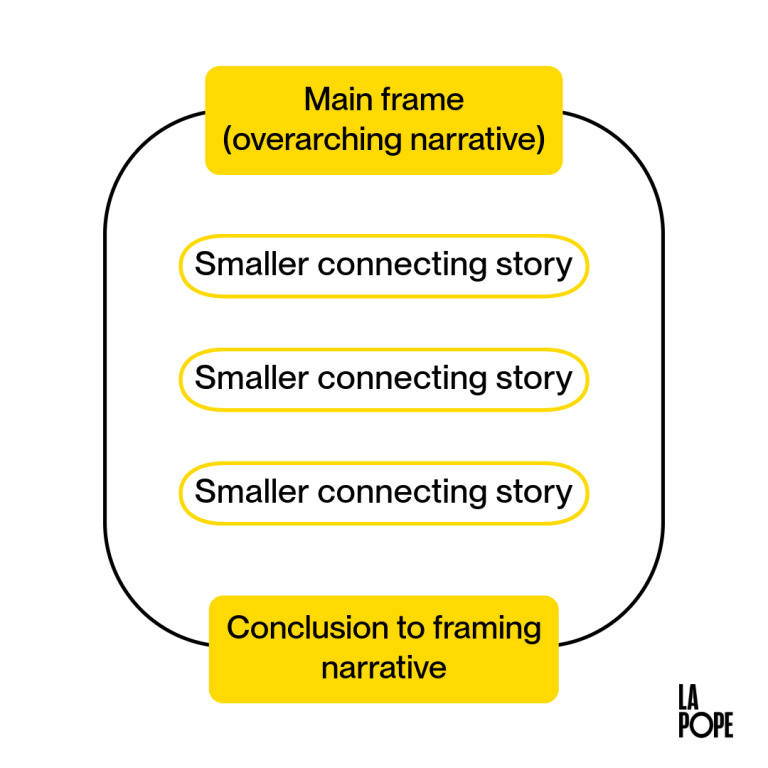
A framing narrative is a story within a story, where an outer story sets the context for an inner story.
For example: The Princess Bride or Grand Budapest Hotel.
It’s good for articles, campaigns, reports, videos and series that need to:
- Entertain or engage the user by providing context or background information
- Persuade the user by using multiple layers of a story or message to build depth
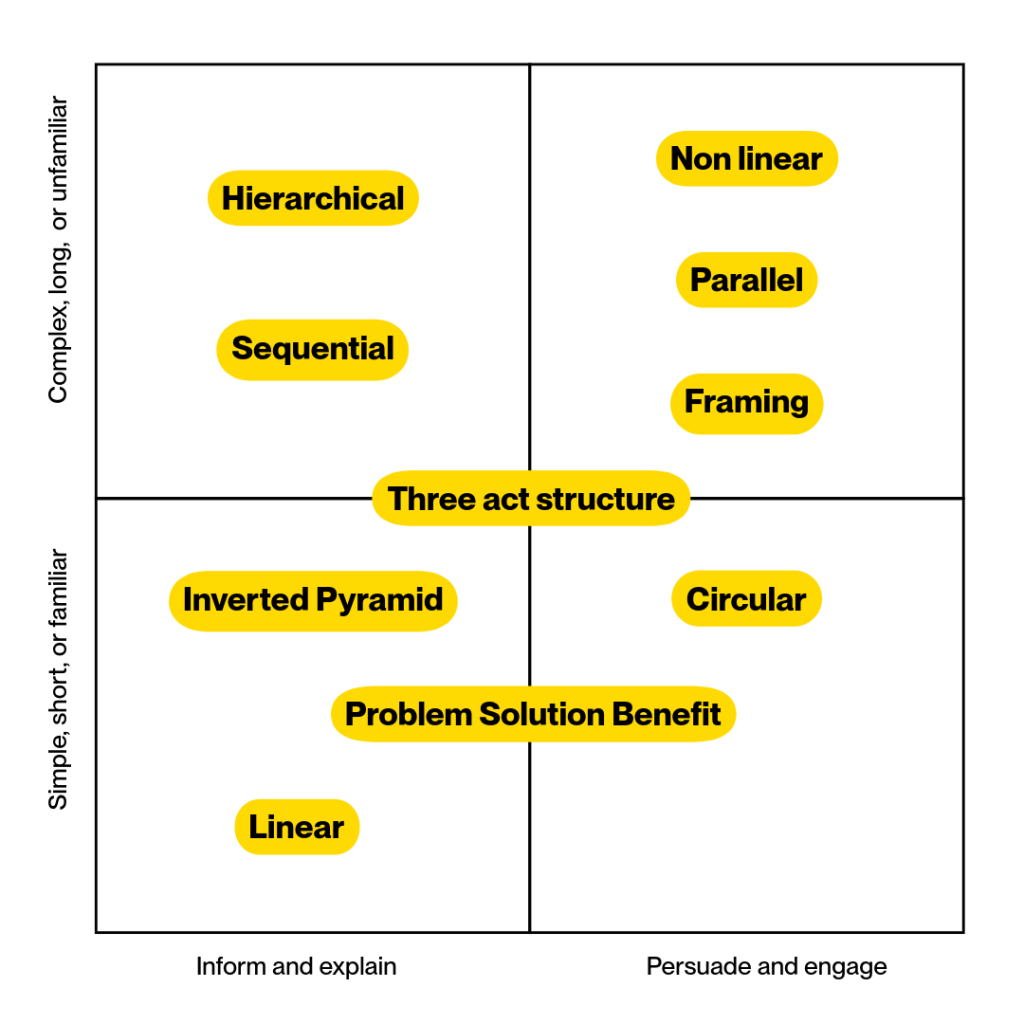
Factors in choosing a structure for your content
There are two main factors to consider in choosing a narrative structure:
- Complexity: How much info is there? How familiar or unfamiliar is it? How challenging is the user likely to find it?
- Scope: What does the info need to do for the user and the organisation? Is the scope to inform or explain? Is it to persuade and advocate? Is it to entertain or engage?
Different structures lend themselves to different levels of complexity and different scopes. This matrix can help you choose the right structure or narrative for the job.
In summary
- Information patterns and narrative structures refer to how information is organised and presented within content
- Choosing a pattern or structure is important for readability, comprehension, and engagement
- There are 10 different patterns and structures for content, including inverted pyramid, hierarchical, sequential, Problem Solution Benefit, linear narrative, nonlinear narrative, circular narrative, three-act narrative, parallel narrative, and framing narrative
- Two main factors to consider when choosing a structure are complexity and scope
Reading list
- Using content types to transform the NHS website, NHS England Digital
- Types of structure, Australian Government Style Manual
- How to structure your content, Content Design London
First published: 16th November 2024
Last reviewed: 22nd April 2026
Related resources

Brand voice: a guide for content strategists

Messaging hierarchy: figuring out how the hell to talk about your organisation