
Report30th September 2026
Introduction
Charity content practitioners are experiencing two significant changes. The way users find and consume information online is shifting because of changes to search engines and adoption of generative AI tools. And the generative AI tools appearing in our workplaces have the potential to disrupt/are already disrupting the way content is planned, written, designed, produced and built.
Either one of these things alone would be a lot to absorb. But teams are dealing with both at once. And to compound it, the whole sector is under prolonged pressure: under-resourced, overstretched, and operating in a challenging political, social and economic climate.
Alongside the material ways AI is changing our work, it’s adding a lot of noise. The relentless marketing telling us that generative AI is infallible and inevitable. The scramble to learn about and apply GEO. (Generative engine optimisation also called answer engine optimisation or AEO. For clarity and consistency, I’ll use the term GEO throughout this report.) The hot takes saying adopt now or get left behind. The public shaming for AI slop. The pressure from leaders to use it to create more content faster.
There’s also a double-edged moral pressure that’s very specific to charities. If generative AI can help us work faster and do more, are we obliged to use it so that we can deliver more value for our donations and funding, and achieve more impact against our mission? (And it can be useful: I’m sure many of us will have felt a thrill when we enter a prompt and the output is something we could never have done without AI, or at least not as quickly.) But at the same time, AI contributes to the climate catastrophe, compromises rights and privacy, reinforces bias and stereotypes. Does using these tools compromise a charity’s credibility and ability to work for the public good? And what about the compromise to our personal ethics?
Spoiler: it’s not about AI
I don’t think we’ll make good decisions about AI if we focus on that noise and on the technology itself. This might seem like an odd thing to say at the start of a report about AI. But if we focus the conversation on AI – what it can do, what everyone else is doing, what’s the best tool – we’re responding to the technology and the hype. What we should be responding to are the things that really matter: our mission, and the people and communities we serve. If we keep those two things in focus, the answers to the questions of if, how, and when to use AI are a lot clearer. That’s the underlying idea that I’ve tried to hold on to throughout this report.
Who and what this report is for
The aim of the report is to give content and comms leaders something that you can use to benchmark your team and organisation against: a sense of where the sector is right now. I also want to give you a clearer picture of what these tools can do and what their limits are, so you can make sharper decisions about capability and application. I also want to provide an honest view of the risks and compromises. Overall, I hope that this gets you closer to understanding what positive, strategic use of AI could look like for your content team.
A note on my personal perspective on AI
I’m a neo-Luddite. But that might not mean what you think it means.
The name ‘Luddite’ has become synonymous with being afraid of technology. But the Luddites weren’t backwards or resisting progress out of fear. They were highly skilled artisan textile workers who knew how to use the weaving looms they vandalised. They protested as a strategic, collective bargaining tactic. They weren’t fighting the looms, but the factory owners who were using technology to cut their wages and take away their agency. Their rebellion was about demanding a say in how technology was used and who could benefit from it.
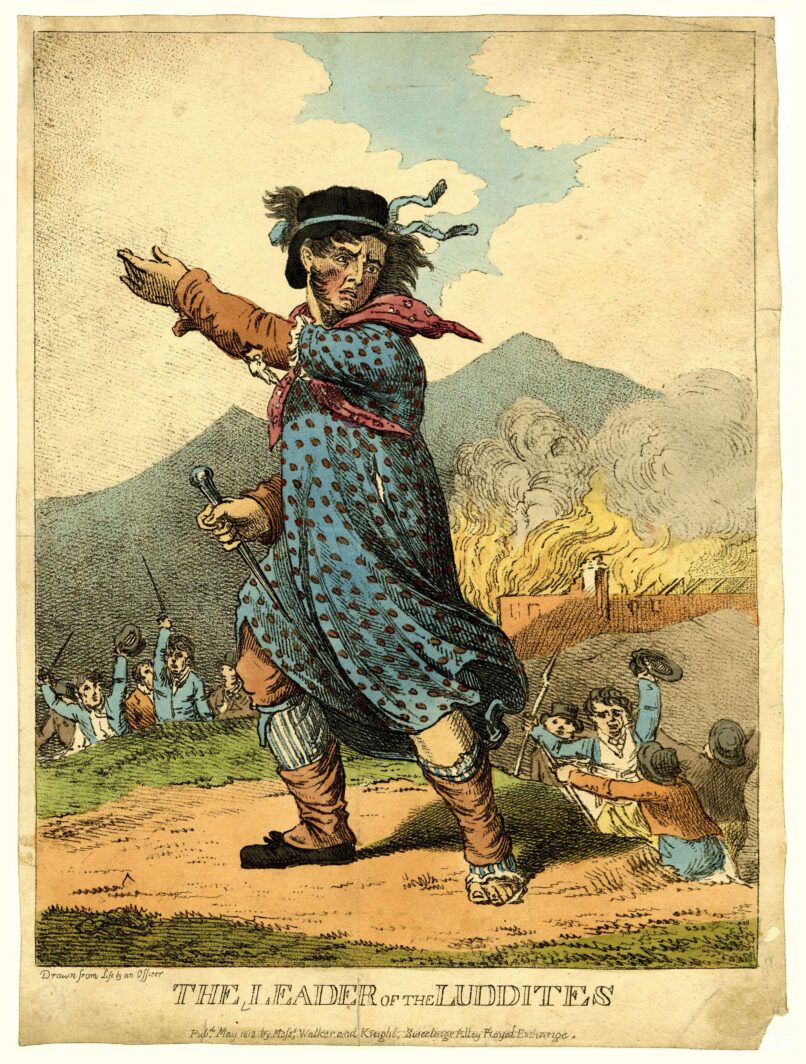
So when I say I’m a neo-Luddite, I mean that I have a critical, sometimes resistant, perspective on generative AI. It’s not rooted in fear, or a lack of understanding of the technology, and I’m not stuck in the ‘resistance’ half of the change curve. It’s rooted in the ethics of the companies behind the products. The way they use people’s work without credit or consent, the environmental cost, the damage to privacy and rights, and more. That perspective inevitably shapes this report, even though I have tried to write fairly and pragmatically. Read my essay: Spite House if you want to understand more about my objections to AI.
About the study
This report draws on primary research carried out in summer 2026. It combines a sector-wide survey of 63 people who produce content, mostly in UK charities and non-profits; 8 in-depth interviews with content leads; and 3 diary studies, in which practitioners logged their use of AI over a week. Survey responses were analysed quantitatively, and free-text answers, interview transcripts and diary entries were coded into themes to find patterns across all three methods.
It was produced with support from William Joseph.
Findings summary
1. Charities are seeing a decline in organic search traffic that they attribute to generative AI
This isn’t just a traffic problem – it’s a sign that the model (create content, get found, build a relationship) underpinning our digital strategies is breaking down. Read more about AI and organic search in part 1.
39%
of have seen a decrease in organic search traffic over the last 12-18 months which they attribute to AI Overviews/AI search.
2. AI overviews, AI summaries, and AI chat bots are creating misinformation about charities and the subject matter areas they deal in.
Sometimes this is down to hallucination, but sometimes it’s down to AI surfacing outdated content from our own websites. This is creating problems for charity content teams, but also – and more importantly – for helplines and services. This is a risk that needs to be mitigated, and can be mitigated with content strategy best practice, but teams often don’t have the capacity and backing they need. Read more about AI misinformation in part 1.
36%
of respondents said that they had seen specific instances of AI tools producing inaccurate information about their organisation.
3. Almost all charity content practitioners are using generative AI.
It’s most commonly used for things like drafting, checking, admin and synthesis. But most are also deliberately opting out of using AI for certain tasks, especially health and advice content. Read more about how charities are using AI in part 2.
4. There’s a real split on using AI to write content.
One group – mostly individual, self-directed AI users with fewer organisational guardrails – use AI to help them get over intimidating blank pages. Another group sees the blank page as the place where the real thinking happens, and avoids AI for drafting as a result. Read more about the split on AI writing in part 2.
70%
deliberately do not use AI for certain tasks
5. Most generative AI use is individual and informal – even though coordinated, team level applications are likely to have the biggest impact.
This isn’t just a gap in terms of efficiency – even ‘safe’ individual uses of AI like summarising and transcription carry accuracy risks, and skipping the associated thinking that comes with them has its own cost. Read more about individual vs team AI use in part 2.
6. It’s not clear if generative AI is having a positive impact or not.
Responses were mixed and no one shared concrete, measurable evidence of an AI application that was saving time or money, or creating better outcomes. Where people do feel that there is a positive impact, it tends to correlate with working somewhere that’s provided training and support. Read more about the impact of AI in part 2.
7. People feel extremely conflicted about using AI.
Ethical concerns are near universal, but this doesn’t often translate into behaviour, and there’s a lot of cognitive dissonance going on. Read more about the ethics of AI for charities in part 3.
8. There’s a lack of useful, meaningful policy, governance and training on AI.
Most respondents have not had formal training, and many do not feel supported by their organisation when it comes to AI. Read more about AI governance in part 4.
87%
have not had any formal training on AI
9. Peer communities of practice are universally praised by those who have access to them.
They reduce anxiety, isolation and shame around AI use and provide valuable opportunities to learn. Read more about AI governance in part 4.
Read the report section-by-section

Part 1: AI, organic search traffic and content discovery

Part 2: How charity content practitioners use AI

Part 3: The ethics of AI for charities

Part 4: Organisation-wide policy, leadership, and support on AI

Appendix, reading list and resources
About the study
This report draws on primary research carried out in summer 2026. It combines a sector-wide survey of 63 people who produce content, mostly in UK charities and non-profits; 8 in-depth interviews with content leads; and 3 diary studies, in which practitioners logged their use of AI over a week. Survey responses were analysed quantitatively, and free-text answers, interview transcripts and diary entries were coded into themes to find patterns across all three methods.
It was produced with support from William Joseph.